Loading and Unloading

Loading & Unloading


Loading Process


Each building is securely wrapped to prevent water damage during transit. Specialized equipment ensures fast and safe loading into the container, and skid rails are attached to the bottom of each package to facilitate smoother unloading. Once the container is loaded, the shipment is sealed and dispatched to the destination. Our logistics team monitors the journey, and the freight company will contact you directly prior to delivery.

One of the pallets is wrapped in plastic and contains construction components for the Windcrest structure.
Stacks of wooden construction components wrapped in protective plastic. The packages are secured with plastic film.
Process of loading cargo onto a self-loading platform. A forklift is delivering a package to the top of the stack. Several people are observing the process, dressed in high-visibility protective clothing. Container loading using an active loading platform.
The photo shows a situation where cargo is being slid into a sea container. The latest loading technology, Actiw LoadPlate, is being used.
Loading process of a shipping container with packages containing building structures.
Shipping container loading through active loading using a platform sliding cargo inside the container. A man, dressed in high-visibility clothing, is observing the container loading process.
Loading cargo into a shipping container before the doors are closed and the container is ready to be transported to the port.
Interior of a shipping container filled with goods.
Container sealing. The truck driver is securing the closed doors of the container, while another person is overseeing the process.


Unloading Process


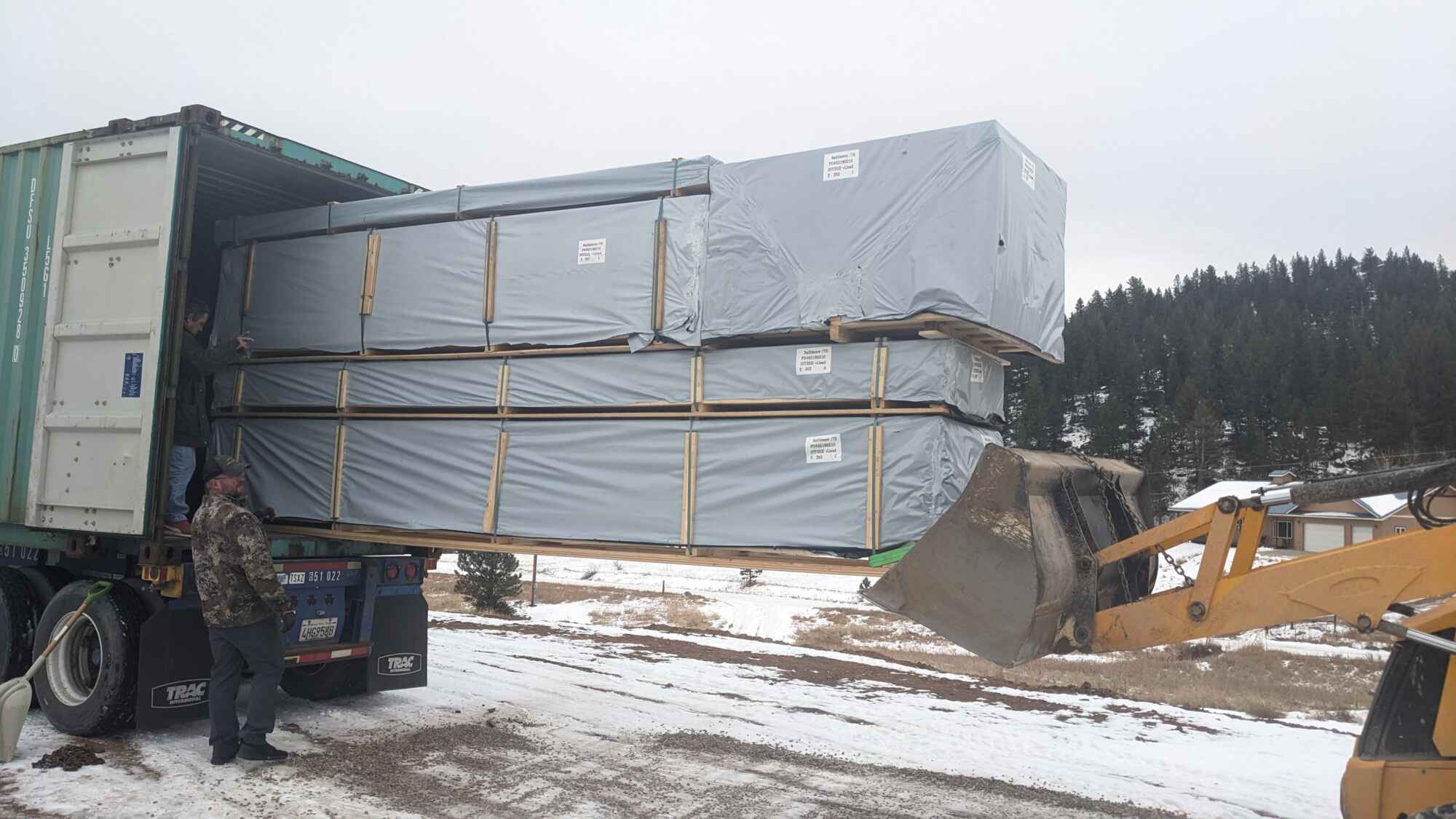
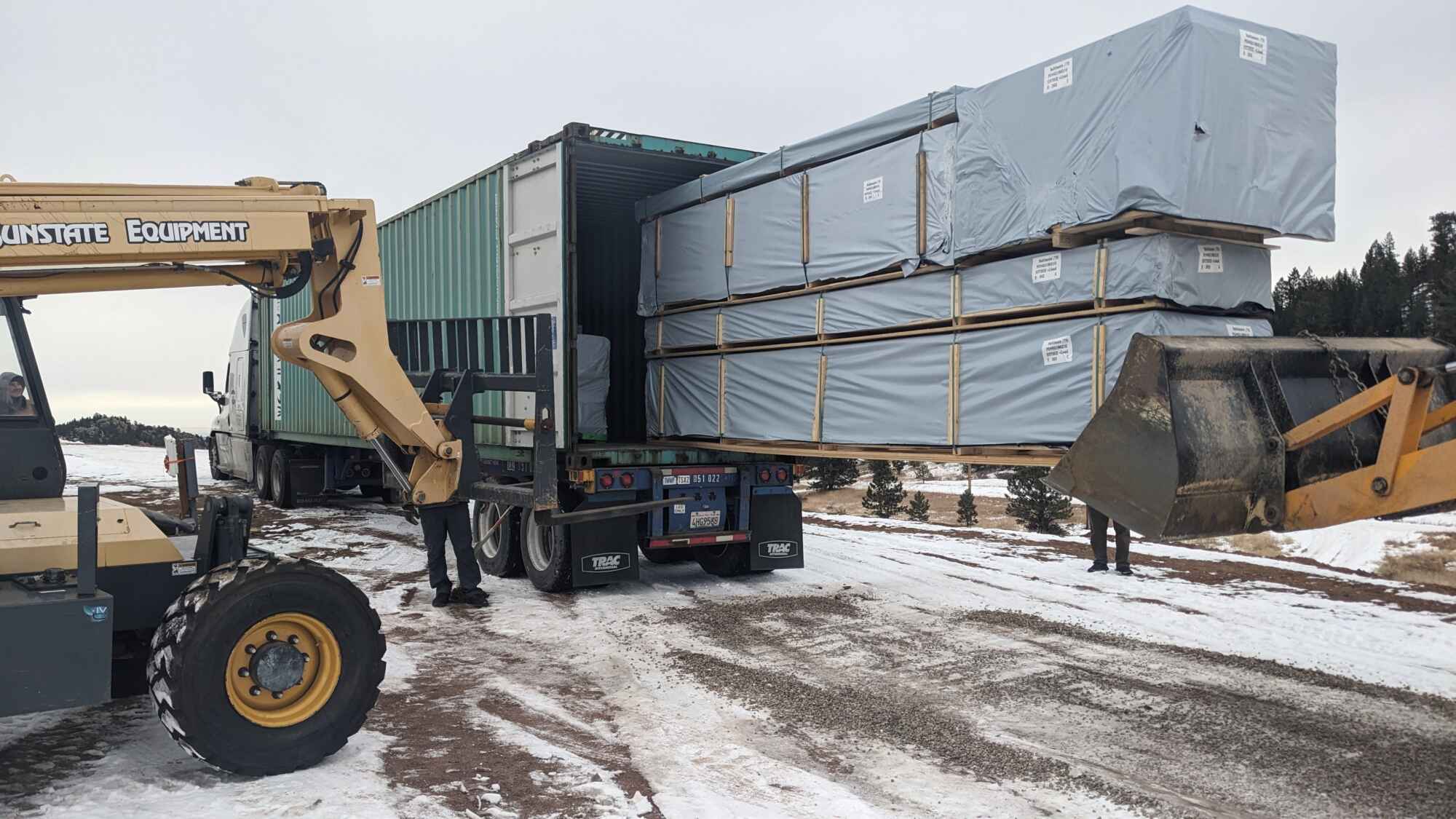
All shipments include straps to assist in pulling the buildings from the container. The most efficient unloading methods use either a loading dock or a flat-deck tow truck. By attaching to the skid rails, you can pull the packages out of the container, onto the truck and then lift them off with a forklift.

Unloading Tips


  1. Coordinate delivery in advance

    • Communicate with the shipping line and the final delivery service to arrange the delivery time and method.

    • Our door-to-door service means the freight company collects the product at our warehouse and delivers directly to your site. Once the product is handed over to the shipping line, it is out of our control and all further arrangements become the customer’s responsibility.

  2. Be aware of timing and charges

    • Ensure you have arranged delivery per the carrier’s requirements.

    • If unloading exceeds the “free time” allotted by the shipping line, additional charges may apply, and these are the recipient’s responsibility.

  3. Handle packages with care once on site

    • Use a forklift to lift each package 1-2 inches (2–5 cm) off the container floor before attempting to pull it—heavy packages may stick to the floor due to compression in transit.

    • Do not attempt to pull the package out without releasing it first—they may be stuck or bonded to the floor which will result in breaking the skids.

    • Pull the package straight out of the container. Avoid pulling at an angle, which can cause binding or jamming and may result in damage to straps or packaging.

    • Avoid jerking or using excessive force—move the package out steadily and gently to protect the material.

Unloading prefab homes pallets from a container. Do it yourself building kits. EZ Log Structures.
Unloading a sea container with long pallets using loading equipment, including a wheeled forklift and a tractor. The truck driver is watching the procedure.
Unloading a sea container that was delivered by a truck, with long pallets using loading equipment, including a wheeled forklift and a tractor. The truck driver is watching the procedure.
Unloading of a sea container. Unloading of long pallets using loading equipment, a forklift on wheels and a tractor. The truck driver is observing the process.

Disclaimer

Great care has been taken to package and load your shipment to help avoid damage during transit. However, unloading must also be conducted carefully to avoid damage. EZ Log Structures does not accept responsibility for damage incurred during unloading.
If there is any concern about damage, a video recording of the unloading process will be required to support any claim. It is the customer’s responsibility to ensure the unloading process is properly documented and performed safely.